
X
  • About
  • Advertise
  • Contact
  • Events
Subscribe to our Newsletter
  • News
    • Markets
    • Regulation
    • Super
    • M&A
    • Tech
    • Appointments
  • Podcast
  • Webcasts
  • Video
  • Analysis
  • Promoted Content
No Results
View All Results
  • News
    • Markets
    • Regulation
    • Super
    • M&A
    • Tech
    • Appointments
  • Podcast
  • Webcasts
  • Video
  • Analysis
  • Promoted Content
No Results
View All Results
No Results
View All Results
Home News Super

Healthy long-term returns not possible without healthy climate, says IFM

The government is unlikely to compel super funds to invest in specific asset classes or projects, IFM Investors' chief executive said.

by Maja Garaca Djurdjevic
September 13, 2022
in News, Super
Reading Time: 3 mins read
Share on FacebookShare on Twitter

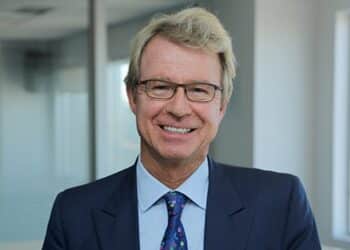
While the national debate has turned to superannuation, with the Treasurer explicitly stating that funds need to do more to address major challenges facing the country, IFM Investors’ CEO, David Neal, said he is confident the government won’t meddle in how funds invest their money.

The Treasurer’s words, given in August as part of a wider announcement of impending super reforms, led to a commentary about the role of super funds in pursuing so-called “national interest” projects and what that would mean to returns.

X

But, addressing the National Conference of the Governance Institute of Australia on Tuesday, Mr Neal said “it is simply nonsense to think that major industry superannuation funds or IFM would make an investment that was not in the best financial interests of members”.

“We all have fiduciary obligations to investors,” Mr Neal said, adding that “funds are simply not going to make investments that don’t make sense financially”.

However, IFM Investors does agree with the Treasurer on one thing — the need for superannuation funds to up their involvement in the energy transition.

According to Mr Neal, the failure to transition to net zero will inflict a 40 per cent reduction in asset value.

“You can’t stock pick your way out of systemic risks like climate change. And risks like this are impossible to diversify away from,” Mr Neal said.

“They will and are impacting our entire economy. And these impacts will compound such that future market returns will deteriorate and many of the superannuation members we are investing for will have much lower retirement incomes as a result.”

Mr Neal believes that investors like IFM need to be working to strengthen the system itself, not just individual assets within it. This, he said, means understanding how “our investment activity and the activity of our assets might influence the health of the economic, environmental and social system around us”.

“Healthy long-term investment returns are dependent on healthy environmental and social systems, now and in the future,” Mr Neal said.

He pointed to scenario analysis by the European Central Bank which found that under a disorderly transition to net zero, European investment funds would see losses of up to 14 per cent of portfolio assets relative to an orderly transition through 2035.

This, he noted, “constitutes a failure of our fiduciary obligations to investors”.

As such, he detailed the IFM Investors’ “two investment imperatives” to address the systemic risk of climate change.

“The first investment imperative is to invest in developing the new assets that our system needs if it is to be healthy,” Mr Neal said. This, in the infrastructure context, includes building clean energy and the supporting infrastructure around it.

The second investment imperative will see the provider of investment services direct capital into an existing stock of assets to accelerate the transition to the new clean economy.

“My view here is that responsible investing means improving long-term returns by being responsible to the society around us. And in this context, it means being willing, and indeed keen, to buy assets with significant emission profiles, and investing to support a transition plan to get those emissions down,” Mr Neal said.

Finally, Mr Neal said, collaboration among super funds is key and the government’s involvement is welcome.

“Strengthening the environmental, social, and economic systems on which broad prosperity depends will often directly contribute to long-term investment returns, and I’d argue that where this line of sight can be drawn, fiduciaries are duty-bound to consider how they can play a role in this strengthening process.”

Owned by Australia’s industry super funds, IFM currently manages just under $200 billion in assets.

Related Posts

Macquarie Securities faces $35m penalty for misleading conduct

by Adrian Suljanovic
December 19, 2025

Macquarie Securities has admitted misleading conduct and systemic reporting failures as ASIC seeks a $35 million penalty in the NSW...

Crypto poised for long-term growth: MHC Digital

by Olivia Grace-Curran
December 19, 2025

Digital assets are entering a pivotal phase of maturity, with 2026 expected to mark a decisive year for institutional adoption,...

Regulatory action to be private credit tailwind in 2026

by Georgie Preston
December 19, 2025

Private credit has successfully demonstrated its “durability” in the last 12 months, according to Metrics Credit Partners, with the firm flagging multiple positive...

Leave a Reply Cancel reply

Your email address will not be published. Required fields are marked *

VIEW ALL
Promoted Content

Why U.S. middle market private credit is a powerful income solution for Australian institutional investors

In today’s investment landscape, middle market direct lending, a key segment of private credit, has emerged as an attractive option...

by Tim Warrick
December 2, 2025
Promoted Content

Is Your SMSF Missing Out on the Crypto Boom?

Digital assets are the fastest-growing investment in SMSFs. Swyftx's expert team helps you securely and compliantly add crypto to your...

by Swyftx
December 2, 2025
Promoted Content

Global dividends reach US$519 billion, what’s behind the rise?

Global dividends surged to a record US$518.7 billion in Q3 2025, up 6.2% year-on-year, with financials leading the way. The...

by Capital Group
November 18, 2025
Promoted Content

Why smaller can be smarter in private credit

Over the past 15 years, middle market direct lending has grown into one of the most dynamic areas of alternative...

by Tim Warrick, Managing Director of Principal Alternative Credit, Principal Asset Management
November 14, 2025

Join our newsletter

View our privacy policy, collection notice and terms and conditions to understand how we use your personal information.

Latest Podcast

Podcast

Relative Return Insider: MYEFO, US data and a 2025 wrap up

by Staff Writer
December 18, 2025
After more than two decades, InvestorDaily continues to be an institution that connects and influences Australia’s financial services sector. This influential and integrated media brand connects with leading financial services professionals within superannuation, funds management, financial planning and intermediary distribution through a range of channels, including digital, social, research, broadcast, webcast and events.

Subscribe to our newsletter

View our privacy policy, collection notice and terms and conditions to understand how we use your personal information.

About Us

  • About
  • Advertise
  • Contact
  • Terms & Conditions
  • Privacy Collection Notice
  • Privacy Policy

Popular Topics

  • Markets
  • Appointments
  • Regulation
  • Super
  • Mergers & Acquisitions
  • Tech
  • Promoted Content
  • Analysis

© 2025 All Rights Reserved. All content published on this site is the property of Prime Creative Media. Unauthorised reproduction is prohibited

No Results
View All Results
NEWSLETTER
  • News
  • Markets
  • Regulation
  • Super
  • M&A
  • Tech
  • Appointments
  • Podcast
  • Webcasts
  • Promoted Content
  • Events
  • About
  • Advertise
  • Contact Us

© 2025 All Rights Reserved. All content published on this site is the property of Prime Creative Media. Unauthorised reproduction is prohibited