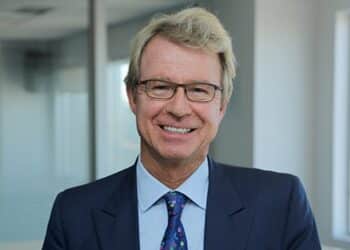

Speaking on the ETF Panel at Citi’s Investment Conference 2025 in Sydney, senior investment strategist Cameron Gleeson commented on the recent stock price surge of computing solutions firm AMD.
Shares in the firm rose by more than 38 per cent in a single day earlier this week and investors in the triple-leveraged inverse exchange-traded fund (ETF) were wiped out.
These types of ETFs aim to triple the returns of the market by applying greater leverage.
“There was a triple-leveraged inverse single-stock ETF over AMD last week which blew up – I don’t think that has a place in Australia. Three-times leveraged single stock is just gambling,” he told the crowd.
Not only triple-leveraged inverse ETFs are a concern with buffer ETFs also coming under Gleeson’s radar for the suitability for Australian investors.
He described them as “interesting” financial instruments but views them as essentially structured products within an ETF wrapper.
Buffer ETFs are those which provide investors with a buffer against market losses in exchange for a cap on how much they can profit.
“Personally, I’m a little bit circumspect as to whether or not they would have a place with Australian investors. Some of the characteristics with the way US investors invest in bonds, the tax consequences are different,” Gleeson said.
“I just think Australian investors aren’t necessarily going to engage with those products. But I do think there’s a continued need for more differentiated investment strategies and different value propositions. They’re labelled as active. I don’t consider them active – I think the value proposition of active is different to that.”
Meanwhile, the adoption of traditional active ETFs is facing headwinds, according to Citi’s chief US equity and ETF strategist Scott Chronert, because of the tech dominance of the Magnificent Seven stocks.
“The adoption of traditional active equity ETFs is probably facing a headwind of Mag 7,” he said.
“What it has meant in the US is your actively managed strategy has had to keep up with that very small cohort of big guys that are dominant in the passive indexes.”
Chronert described traditional active ETFs as another area where growth is stalling.
“How do you compete with an S&P 500 or Nasdaq that’s loaded with these companies, that’s giving you such stellar performance, absolute relative over the past couple of years?” Chronert said.
“The way you would traditionally think of an active manager building a model portfolio of stocks and putting it in ETFs – that’s struggling a little bit, because you’ve got a benchmark that’s just kind of doing a very unique thing.”
He said innovation could help bridge the gap and address different investor needs.
“We debate whether these are equity products or income products, but what you end up seeing in the ETF industry time and again is where the novelty, the first-mover advantage that comes with a new type of product that fits a client need at a certain time – these things can go, and that’s what’s happening right now.”
Globally, from 2019 to 2025, active ETFs have grown from 2 per cent to 10 per cent of total ETF AUM – with active ETFs now making up 38 per cent of the global ETF market. In the US, 80 per cent of all ETF listings in 2024 were active products, and recently, active ETFs surpassed passive by number of listings.
“We think that there’s still several trillion in AUM that migrates away from mutual funds towards ETFs and a number of different paths for that,” Chronert said.
Locally, the first active ETF was listed in Australia in 2015, and currently, 37 per cent of ETFs listed in Australia are active. Australia’s ETF market recently surged past $300 billion in assets as investor demand and product diversity continue to grow.
“The active playing field is at this point becoming pretty open-ended. There have been some very specific areas of initial growth. We’ve got the conversions now that are coming as more asset managers from traditional mutual fund space go down the ETF path. The bottom line here is this trend is not going anywhere anytime soon,” he said.
But unlike Gleeson’s concerns, Chronert believes the big wave at the moment is in overriding and buffer strategies.
“This is where it gets interesting. There have been some really big wins in this regard, and essentially what we’re debating is where do we categorise these? Essentially the overridings, yes, they do give you a little bit different traditional equity risk-reward set-up, but what you get is this income overlay,” Chronert said.
He posed the question – what do these products come at the expense of?
“Do they come at the expense of other fixed income alternatives? We’re actually suggesting that they certainly come at the expense of dividend products.”
From an exchange perspective, Cboe head of listings, Oran D’Arcy said the exchange is seeing increased choice and adoption due to the evolution of the market, an optimised ecosystem, and service providers who are adept at getting products to market quickly and efficiently.
“Five years ago, the average number of transactions in ETFs in Australia was 4,000, now it’s 65,000,” D’Arcy said.
“With the addition of active funds, we’re seeing the normalisation of active in an ETF wrapper. This just continues to grow.”