
X
  • About
  • Advertise
  • Contact
  • Events
Subscribe to our Newsletter
  • News
    • Markets
    • Regulation
    • Super
    • M&A
    • Tech
    • Appointments
  • Podcast
  • Webcasts
  • Video
  • Analysis
  • Promoted Content
No Results
View All Results
  • News
    • Markets
    • Regulation
    • Super
    • M&A
    • Tech
    • Appointments
  • Podcast
  • Webcasts
  • Video
  • Analysis
  • Promoted Content
No Results
View All Results
No Results
View All Results
Home News Markets

Is passive investing really driving CBA’s rally?

Commonwealth Bank of Australia’s (CBA) recent surge in share price has sparked debate on whether passive investing, particularly via exchange-traded funds (ETF), is a key driver behind the rally.

by Maja Garaca Djurdjevic
July 2, 2025
in Markets, News
Reading Time: 3 mins read
Share on FacebookShare on Twitter

CBA is often touted as the biggest holding in widely held ASX 200 ETFs like VAS, IOZ, A200 and STW, which has led some market commentators to link the bank’s price surge to ETF-buying activity. Yet, research from ETF Shares shows these ETFs collectively own approximately 1.34 per cent of CBA’s total shares on issue – around 22.4 million shares out of 1.7 billion.

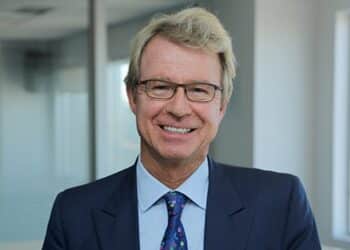
“Since 1 January, these ETFs have bought about 1.8 million CBA shares over the 125 trading days this year. Assuming smooth flows, that works out to buying 15,000 shares a day. Now, CBA trades on average around 2.1 million shares a day. Meaning these ETFs are responsible for less than 1 per cent of CBA’s average daily trading volume. That’s not enough to move the market on a company this large,” David Tuckwell wrote on LinkedIn.

X

He also pointed out a critical nuance often missed – much of the money flowing into ASX 200 ETFs is recycled from active funds or direct shareholdings already exposed to CBA.

“What we’ve often seen in ASX 200 ETF flows is money shifting sideways. It does not logically follow from the fact that ASX 200 ETFs experience inflows that aggregate demand for CBA’s shares is therefore increasing,” Tuckwell said.

If ETFs were truly behind the surge, he argued, similar effects would be evident in other large-cap stocks. Yet, BHP – the second largest ASX stock with an 8 per cent index weight – is down 9 per cent year-to-date.

Tuckwell also argued against conflating ETF inflows with index inclusion effects, arguing the two operate under different market dynamics.

“Index inclusion is well-known for sparking rallies. Arena REIT jumped 5–7 per cent on joining the ASX 200 in 2022. Boss Energy soared 20 per cent in December 2023 on the same news. Tesla’s 70 per cent rally ahead of its S&P 500 inclusion in 2020 is perhaps the most dramatic recent example,” he said.

“But index inclusion and subsequent rallies predate ETFs, and they’re not driven by passive vehicles alone. Active managers pile in too.”

While ETFs could theoretically wield more influence as their market share grows, Tuckwell suggested current evidence shows they are a convenient scapegoat for CBA’s rally.

“Could ETFs one day become so large that they do set CBA’s price? Theoretically, yes. But we’re nowhere near there yet,” he said.

“For now, ETF flows look more like a scapegoat. The search continues for the real driver of what’s fast becoming the most hated rally on the ASX.”

In recent months, superannuation funds, too, have come under scrutiny for allegedly distorting equity markets and inflating Commonwealth Bank’s share price through their size and benchmark-driven investment strategies.

“The big issue in Australia is the concentration of industry funds. Whenever you get concentration of power, you get trouble,” PM Capital’s Paul Moore recently said. “The problem is, the industry super funds in Australia have supercharged the passive impact.”

Betashares executive director Cameron Gleeson also acknowledged the outsized influence of large super funds in equity markets but pushed back on the idea that passive investing itself is responsible for the rally.

“It isn’t passive itself that has driven what has happened with the banks,” he said in May.

“Absolutely right, big super is the gorilla in the room. Your Future, Your Super has changed the way these fundamentally active managers have had to manager their portfolios.”

Gleeson pointed instead to reports of increased buying activity in the banking sector last year as funds sought to reduce underweights in key financial stocks – a dynamic that, he suggested, played a more material role in pushing up prices.

“There’s been comments around big super being at limits in terms of Australian equities, and they’ve reduced buying within Australian banks this year,” he said.

“If you want to break it down, it’s certainly big super that owns a quarter to a third of the Australian equities market, rather than straight index or straight ETF.”


Related Posts

Australia’s funds rise yet remain small on global stage

by Adrian Suljanovic
December 5, 2025

Australia’s top super funds have climbed in global rankings but their assets pale in comparison to the world’s dominant asset...

Investors brace for crucial central bank decisions

by Olivia Grace-Curran
December 5, 2025

Global markets are entering a critical phase as traders prepare for upcoming central bank decisions from the Reserve Bank of...

Traders rotate from banks as speculative trades surge

by Adrian Suljanovic
December 5, 2025

Investors moved from banks into blue chips and speculative names in November as trading activity fell across AUSIEX accounts. Australia’s...

Leave a Reply Cancel reply

Your email address will not be published. Required fields are marked *

VIEW ALL
Promoted Content

Why U.S. middle market private credit is a powerful income solution for Australian institutional investors

In today’s investment landscape, middle market direct lending, a key segment of private credit, has emerged as an attractive option...

by Tim Warrick
December 2, 2025
Promoted Content

Is Your SMSF Missing Out on the Crypto Boom?

Digital assets are the fastest-growing investment in SMSFs. Swyftx's expert team helps you securely and compliantly add crypto to your...

by Swyftx
December 2, 2025
Promoted Content

Global dividends reach US$519 billion, what’s behind the rise?

Global dividends surged to a record US$518.7 billion in Q3 2025, up 6.2% year-on-year, with financials leading the way. The...

by Capital Group
November 18, 2025
Promoted Content

Why smaller can be smarter in private credit

Over the past 15 years, middle market direct lending has grown into one of the most dynamic areas of alternative...

by Tim Warrick, Managing Director of Principal Alternative Credit, Principal Asset Management
November 14, 2025

Join our newsletter

View our privacy policy, collection notice and terms and conditions to understand how we use your personal information.

Latest Podcast

Podcast

Relative Return Insider: GDP rebounds and housing squeeze getting worse

by Adrian Suljanovic
December 5, 2025
After more than two decades, InvestorDaily continues to be an institution that connects and influences Australia’s financial services sector. This influential and integrated media brand connects with leading financial services professionals within superannuation, funds management, financial planning and intermediary distribution through a range of channels, including digital, social, research, broadcast, webcast and events.

Subscribe to our newsletter

View our privacy policy, collection notice and terms and conditions to understand how we use your personal information.

About Us

  • About
  • Advertise
  • Contact
  • Terms & Conditions
  • Privacy Collection Notice
  • Privacy Policy

Popular Topics

  • Markets
  • Appointments
  • Regulation
  • Super
  • Mergers & Acquisitions
  • Tech
  • Promoted Content
  • Analysis

© 2025 All Rights Reserved. All content published on this site is the property of Prime Creative Media. Unauthorised reproduction is prohibited

No Results
View All Results
NEWSLETTER
  • News
  • Markets
  • Regulation
  • Super
  • M&A
  • Tech
  • Appointments
  • Podcast
  • Webcasts
  • Promoted Content
  • Events
  • About
  • Advertise
  • Contact Us

© 2025 All Rights Reserved. All content published on this site is the property of Prime Creative Media. Unauthorised reproduction is prohibited