
X
  • About
  • Advertise
  • Contact
  • Events
Subscribe to our Newsletter
  • News
    • Markets
    • Regulation
    • Super
    • M&A
    • Tech
    • Appointments
  • Podcast
  • Webcasts
  • Video
  • Analysis
  • Promoted Content
No Results
View All Results
  • News
    • Markets
    • Regulation
    • Super
    • M&A
    • Tech
    • Appointments
  • Podcast
  • Webcasts
  • Video
  • Analysis
  • Promoted Content
No Results
View All Results
No Results
View All Results
Home News Markets

‘Way too early’ to call another GFC, says ANZ CEO

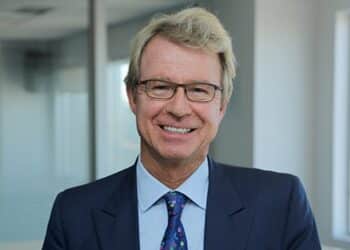
ANZ CEO Shayne Elliott says that recent events are “really, really different” than what happened during the global financial crisis.

by Jon Bragg
March 27, 2023
in Markets, News
Reading Time: 3 mins read
Share on FacebookShare on Twitter

Global banking turmoil following the recent bank collapses in the US and the bailout of Credit Suisse could potentially turn into a financial crisis, according to ANZ chief executive officer Shayne Elliott.

However, suggestions that the world may be gripped by another global financial crisis (GFC) like that seen between 2007 and 2009 are premature, he opined.

X

“It’s too early to call it a — I mean, it’s a crisis for some, obviously, but is it a financial crisis in the typical sense? Who knows? Does it have the potential to be one? Yes, it does have the potential to be one,” Mr Elliott said in a recent interview published on ANZ’s website.

He pointed out that a financial crisis has taken place on average every six or seven years, with 39 financial crises in total over the past 250 years.

“We shouldn’t be surprised, in a funny way, that things like this happen,” Mr Elliott said.

Drawing on the saying that ‘history never repeats itself, but it does often rhyme’, Mr Elliott said that it is possible to draw comparisons to previous turmoils and crises, including the GFC.

“But actually, when you really get the microscope out, the causes and what’s going on here are really, really different than the GFC,” he said.

“GFC was fundamentally a crisis around the quality of assets and the loans that banks make, and that’s not what the risk is here. This is a different issue. This is really to do with the global war on inflation and how central banks are raising rates very quickly in order to combat that, and that has casualties.”

Mr Elliot suggested that the recent events more closely reflect the savings and loan crisis seen in the US in the 1980s and 1990s, during which a similarly heavy increase in interest rates exposed a lot of poor businesses to risk.

Another key difference between now and the past, Mr Elliot said, is that regulators and governments have drawn on the lessons learnt during the GFC.

“You’ve seen that in the last week or so in Europe and you’ve seen it in the United States that, really, the ability for regulators to come in with a sort of overwhelming force really quickly, to resolve a situation, to calm the markets down,” he said.

“The regulators have acted much more profoundly than they did in the GFC through that learning, so that’s different this time.”

The greater strength of the economy, the banking sector, corporates and households prior to the recent events was also highlighted by Mr Elliott as a key difference to the GFC, along with tighter regulation on global banks which now have more capital and more liquidity.

“That should suggest that the impacts of this will be less. Having said all that, it’s clearly not over. I don’t think you can sit here and say, ‘well, that’s all done — Silicon Valley Bank and Credit Suisse — life will go back to normal’,” he added.

“These things tend to roll through over a long period of time … history says it’ll take many, many months, if not a year, for these things to roll through the economy.”

Mr Elliot noted that it was almost certain that regulators around the world would be looking into new measures to protect depositors and the economy from change going forward.


Related Posts

Growth debt set for bigger role amid capital squeeze

by Adrian Suljanovic
December 4, 2025

Growth debt has emerged as a key financing tool as equity and bank lending tightens heading into 2026. Growth debt...

Australian asset giants climb in global rankings

by Georgie Preston
December 4, 2025

Two Australian asset owners are among the largest risers since 2017 in a WTW top 100 ranking while the research...

Overhaul urged for First Nations investment

by Adrian Suljanovic
December 4, 2025

A RIAA research paper has urged investors to rethink how capital investment aligns with Indigenous priorities and economic empowerment. A...

Leave a Reply Cancel reply

Your email address will not be published. Required fields are marked *

VIEW ALL
Promoted Content

Why U.S. middle market private credit is a powerful income solution for Australian institutional investors

In today’s investment landscape, middle market direct lending, a key segment of private credit, has emerged as an attractive option...

by Tim Warrick
December 2, 2025
Promoted Content

Is Your SMSF Missing Out on the Crypto Boom?

Digital assets are the fastest-growing investment in SMSFs. Swyftx's expert team helps you securely and compliantly add crypto to your...

by Swyftx
December 2, 2025
Promoted Content

Global dividends reach US$519 billion, what’s behind the rise?

Global dividends surged to a record US$518.7 billion in Q3 2025, up 6.2% year-on-year, with financials leading the way. The...

by Capital Group
November 18, 2025
Promoted Content

Why smaller can be smarter in private credit

Over the past 15 years, middle market direct lending has grown into one of the most dynamic areas of alternative...

by Tim Warrick, Managing Director of Principal Alternative Credit, Principal Asset Management
November 14, 2025

Join our newsletter

View our privacy policy, collection notice and terms and conditions to understand how we use your personal information.

Latest Podcast

Podcast

Relative Return Insider: US shares rebound, CPI spikes and super investment

by InvestorDaily Staff
November 28, 2025
After more than two decades, InvestorDaily continues to be an institution that connects and influences Australia’s financial services sector. This influential and integrated media brand connects with leading financial services professionals within superannuation, funds management, financial planning and intermediary distribution through a range of channels, including digital, social, research, broadcast, webcast and events.

Subscribe to our newsletter

View our privacy policy, collection notice and terms and conditions to understand how we use your personal information.

About Us

  • About
  • Advertise
  • Contact
  • Terms & Conditions
  • Privacy Collection Notice
  • Privacy Policy

Popular Topics

  • Markets
  • Appointments
  • Regulation
  • Super
  • Mergers & Acquisitions
  • Tech
  • Promoted Content
  • Analysis

© 2025 All Rights Reserved. All content published on this site is the property of Prime Creative Media. Unauthorised reproduction is prohibited

No Results
View All Results
NEWSLETTER
  • News
  • Markets
  • Regulation
  • Super
  • M&A
  • Tech
  • Appointments
  • Podcast
  • Webcasts
  • Promoted Content
  • Events
  • About
  • Advertise
  • Contact Us

© 2025 All Rights Reserved. All content published on this site is the property of Prime Creative Media. Unauthorised reproduction is prohibited