
X
  • About
  • Advertise
  • Contact
  • Events
Subscribe to our Newsletter
  • News
    • Markets
    • Regulation
    • Super
    • M&A
    • Tech
    • Appointments
  • Podcast
  • Webcasts
  • Video
  • Analysis
  • Promoted Content
No Results
View All Results
  • News
    • Markets
    • Regulation
    • Super
    • M&A
    • Tech
    • Appointments
  • Podcast
  • Webcasts
  • Video
  • Analysis
  • Promoted Content
No Results
View All Results
No Results
View All Results
Home News Markets

Government must work with RBA for prosperity

The governor of the RBA has said that the central bank is open to cutting rates again, but the government has to do its part to promote economic prosperity.

by Eliot Hastie
June 21, 2019
in Markets, News
Reading Time: 3 mins read
Share on FacebookShare on Twitter

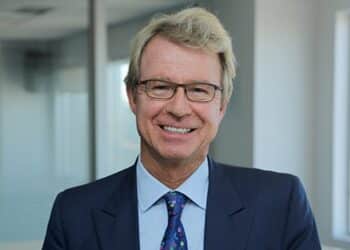
At a speech to the CEDA in Adelaide, governor Philip Lowe said that the economy still had significant capacity and the option to cut rates was still on the table. 

“It is not unrealistic to expect a further reduction in the cash rate as the [RBA] board seeks to wind back spare capacity in the economy and deliver inflation outcomes in line with the medium-term target,” he said. 

X

However, Mr Lowe said the RBA could not do the work to ensure economic prosperity alone and it required the government’s help. 

“It is important though to recognise that monetary policy is not the only option, and there are limitations to what can be achieved. As a country, we should also be looking at other ways to get closer to full employment,” he said. 

Monetary policy was one measure and the RBA’s decision had shown it would assist that, but the government needed to consider both fiscal and structural policies to maximise prosperity. 

“One option is fiscal policy, including through spending on infrastructure. Another is structural policies that support firms expanding, investing, innovating and employing people,” Mr Lowe said. 

“Both of these options need to be kept in mind as the various arms of public policy seek to maximise the economic prosperity of the people of Australia.”

Earlier this month, the RBA cut rates to record lows after two and a half years, making the official rate 1.25 per cent. 

Mr Lowe said the decision was not in response to a deterioration but rather a judgement that Australia could do better. 

“The Australian economy can sustain a higher rate of employment growth and a lower unemployment rate than previously thought likely. Most indicators suggest that there is still a fair degree of spare capacity in the economy.” 

One of the indicators was in the unemployment data, but conventional estimates of that were no longer sufficient. 

“The fact that the conventional estimate of spare capacity is based on the unemployment rate reflects an implicit assumption that, if you have a job, you are pretty much fully employed. In decades past, this might have been a reasonable assumption. But it is not a realistic assumption in today’s modern flexible labour market,” Mr Lowe said. 

The thinking on employment had to change to reflect part-time and full-time work, and underemployment measures had to be considered when assessing spare capacity, Mr Lowe said. 

“Unlike the unemployment rate, which has trended down over the past 20 years, the underemployment rate has been relatively stable,” the RBA governor said.

“These different patterns in unemployment and underemployment suggest that fewer inroads have been made into spare capacity in the labour market than suggested by looking at the unemployment rate alone.”

The second indicator for spare capacity was in labour supply, which was still flexible in Australia due to female and older Australia participation and migrants, Mr Lowe said. 

“This rise in participation is a positive development. But it is one of the factors that has meant that strong demand for labour has not put much upward pressure on wages,” he said. 

The third indicator was the people looking for jobs were matched with the jobs that are available, which looked a little tighter, Mr Lowe said. 

“At present, there are fewer than three unemployed people for each vacancy. This compares with over 20 people for every vacancy in the early 1990s recession and five people for every vacancy in 2014. From this perspective, the labour market looks reasonably tight,” he said. 

Lastly, Mr Lowe said wages growth had only had a modest increase and was below the comfortable rate. 

“Wages growth remains modest and is below the rate that would ensure that inflation is comfortably within the 2 to 3 per cent range,” he said.


Related Posts

Janus Henderson to go private following US$7.4bn acquisition

by Laura Dew
December 23, 2025

Global asset manager Janus Henderson has been acquired by Trian Fund Management and General Catalyst in a US$7.4 billion deal....

Australian Super targets $1trn within a decade

by Adrian Suljanovic
December 22, 2025

Australia’s largest superannuation fund has announced it is targeting $1 trillion in assets by 2035, up from its current size...

The biggest people moves of Q4

by Olivia Grace-Curran
December 22, 2025

InvestorDaily collates the biggest hires and exits in the financial service space from the final three months of 2025. Movements...

Leave a Reply Cancel reply

Your email address will not be published. Required fields are marked *

VIEW ALL
Promoted Content

Why U.S. middle market private credit is a powerful income solution for Australian institutional investors

In today’s investment landscape, middle market direct lending, a key segment of private credit, has emerged as an attractive option...

by Tim Warrick
December 2, 2025
Promoted Content

Is Your SMSF Missing Out on the Crypto Boom?

Digital assets are the fastest-growing investment in SMSFs. Swyftx's expert team helps you securely and compliantly add crypto to your...

by Swyftx
December 2, 2025
Promoted Content

Global dividends reach US$519 billion, what’s behind the rise?

Global dividends surged to a record US$518.7 billion in Q3 2025, up 6.2% year-on-year, with financials leading the way. The...

by Capital Group
November 18, 2025
Promoted Content

Why smaller can be smarter in private credit

Over the past 15 years, middle market direct lending has grown into one of the most dynamic areas of alternative...

by Tim Warrick, Managing Director of Principal Alternative Credit, Principal Asset Management
November 14, 2025

Join our newsletter

View our privacy policy, collection notice and terms and conditions to understand how we use your personal information.

Latest Podcast

Podcast

Relative Return Insider: MYEFO, US data and a 2025 wrap up

by Staff Writer
December 18, 2025
After more than two decades, InvestorDaily continues to be an institution that connects and influences Australia’s financial services sector. This influential and integrated media brand connects with leading financial services professionals within superannuation, funds management, financial planning and intermediary distribution through a range of channels, including digital, social, research, broadcast, webcast and events.

Subscribe to our newsletter

View our privacy policy, collection notice and terms and conditions to understand how we use your personal information.

About Us

  • About
  • Advertise
  • Contact
  • Terms & Conditions
  • Privacy Collection Notice
  • Privacy Policy

Popular Topics

  • Markets
  • Appointments
  • Regulation
  • Super
  • Mergers & Acquisitions
  • Tech
  • Promoted Content
  • Analysis

© 2025 All Rights Reserved. All content published on this site is the property of Prime Creative Media. Unauthorised reproduction is prohibited

No Results
View All Results
NEWSLETTER
  • News
  • Markets
  • Regulation
  • Super
  • M&A
  • Tech
  • Appointments
  • Podcast
  • Webcasts
  • Promoted Content
  • Events
  • About
  • Advertise
  • Contact Us

© 2025 All Rights Reserved. All content published on this site is the property of Prime Creative Media. Unauthorised reproduction is prohibited