
Institutional investors, clearer regulation and a shift toward long-term investing are pushing cryptocurrency closer to the financial mainstream, with 2026 shaping up as a pivotal year for digital assets, according to Binance Australia.
After a year defined more by consolidation than exuberance, the digital asset sector is showing signs of maturity both globally and locally.
Binance says investor behaviour in 2025 shifted decisively toward long-term participation, with investors concentrating on established assets such as Bitcoin and Ethereum, while regulators moved from observing the market to actively shaping it.
On Binance’s platform, institutional users increased by 14 per cent year-on-year in 2025, with institutional trading volumes up 13 per cent. The company expects that momentum to accelerate as corporate treasuries increasingly diversify beyond traditional assets.
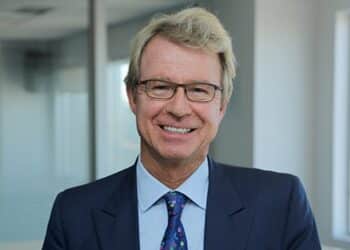
Binance Australia and New Zealand general manager Matt Poblocki said 2025 represented an inflection point for the industry. The exchange’s 2026 outlook points to the accelerating pace of adoption and the shift from early experimentation toward long-term participation as key drivers of milestone growth.
“This accelerating participation aligns with crypto moving from speculation to consolidation. We saw users become more deliberate, institutions step in at scale, and regulators move from observing the market to actively shaping it,” Poblocki said.
“That combination has fundamentally changed the trajectory of the industry and laid a strong foundation for 2026.”
Periods of volatility during the year increasingly prompted investors to rotate into established “blue-chip” digital assets rather than exit the market altogether. Security, trust and asset protection remained top priorities, particularly for new entrants.
Australian investor behaviour closely mirrored global trends, with growing participation accompanied by a clear tilt toward fundamentals. Research by Protocol Theory, commissioned by Binance Australia, found that 26 per cent of Australians now own cryptocurrency, with a further 32 per cent open to investing in the future.
As adoption increased, trading activity became more concentrated around established, large-cap assets. Bitcoin was the most traded cryptocurrency on Binance Australia in December, followed by Ethereum and Solana, while the top 10 traded assets remained largely unchanged over the year.
“Australian investors showed a clear shift toward fundamentals [in 2025],” Poblocki said.
“Rather than chasing hype, they consolidated around credible, large-cap assets. That discipline is a strong signal of a maturing and informed local market.”
Binance’s 2025 User Pulse survey, covering more than 95,000 users across 48 markets, shows half of users now identify as long-term holders, with portfolio diversification, seeking higher returns and investing for future purchases, such as buying a home, among their top motivations. Security, trust and asset protection remained top priorities for new users.
Despite the more measured approach, trading activity remained robust. According to Kaiko data, Binance accounted for between 35 per cent and 45 per cent of global Bitcoin and Ethereum trading volume throughout 2025. Average daily Bitcoin volumes ranged between US$5 billion and US$10 billion, peaking near US$20 billion, while Ethereum volumes regularly reached US$15 billion.
Looking ahead, Binance expects 2026 to be defined by closer integration between digital assets and the global financial system, driven by rising institutional participation and regulatory clarity.
One of the clearest indicators of this shift is the changing profile of Bitcoin ownership. Bitcoin held on exchanges has fallen to its lowest level in five years, while holdings by public companies and exchange-traded funds continue to rise. More than 200 public companies now hold Bitcoin on their balance sheets, a trend analysts say could help dampen volatility over time.
Regulation is also expected to play a defining role. In Australia, proposed reforms under Treasury’s Digital Assets Bill and the implementation of the OECD’s Crypto-Asset Reporting Framework are set to provide clearer rules for platforms and investors, reinforcing a focus on compliance, transparency and consumer protection.
Stablecoins are another area of growing importance. With global market capitalisation now exceeding US$300 billion, they are increasingly being used for payments, remittances and value preservation rather than purely for trading.
“Global and local regulatory progress is ensuring crypto is here to stay. In Australia, clearer regulations will help the wider industry strike the right balance between innovation and user protection,” Poblocki said.
As the sector enters what Binance describes as its next chapter, the emphasis is shifting toward utility, trust and long-term value.
“Ultimately, 2026 will be about moving beyond hype and speculation toward delivering real, scalable value. We believe that the crypto industry’s next chapter is one of purposeful adoption, trust, and long-term impact. When innovation meets responsibility, that is when digital assets will become an integral part of everyday finance.”