
With the market pricing in just under two cash rate cuts this year, FIIG Securities has outlined how investors can capture the potential upside in fixed income while managing risk.
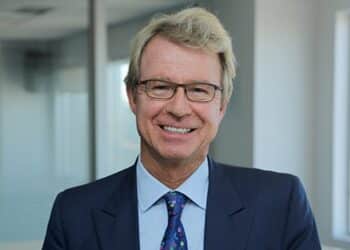
Writing in a note this week, head of research at FIIG Securities, Philip Brown, gave his advice for fixed interest investors this year amid expectations that the Reserve Bank of Australia (RBA) will raise rates while most other countries are cutting.
Rates are currently sitting at 3.6 per cent but there is a chance for two further rate cuts to come.
With Australia looking to be a global outlier in its monetary policy, Brown explained that each rate rise would hit the economy harder.
“The market is already pricing in the full extent of the likely move, making now a good time to increase overall allocation to fixed income,” he said, identifying attractive options such as floating rate bonds, low-risk bonds and others.
Regardless of what transpires for the cash rate this year, based on the current scenario, Brown noted that bond yields are much higher than they were only a few months ago, providing opportunities for those looking to recycle or deploy capital.
“The market is assuming a decent period of rate rises, which may or may not occur, but will likely see periods where solid yields of 6 per cent and more are available for low-risk bonds,” he said.
Brown added that rising cash rates would also see floating rate bonds – a popular choice during interest rate hike cycles – provide higher returns. This is particularly true if inflation were to rise alongside the cash rate.
For more direct inflation protection, FIIG suggested inflation linked bonds or infrastructure asset-backed securitisation (IAB) with many of the longer-term yield on these looking “quite attractive”.
“Investors must decide whether they are happy to lock in attractive fixed yields and risk short-term volatility in the capital price, or if capital preservation is more important to them and they want to focus on floating rate notes and not have a guaranteed coupon rate.”
Discussing risk management more generally, Brown advised that with the RBA seeking to raise rates, underlying pressure points in the economy will come to the fore, making sector diversification more important. There is also a chance of substantial exchange rate volatility if the Australian dollar strengthens which would make offshore investments more risky.
Rate expectations
Currently sitting at 3.60 per cent after being left unchanged in December, the next RBA board meeting and official cash rate announcement is scheduled for 3 February. The market is pricing in just under two cash rate hikes, leaving Australia not far below its recent peak – a scenario Brown argued “seems unnecessary.”
It comes as LGT Wealth Management recently stated that domestic fixed income is better positioned than other economies for stronger performance across the coming quarters. Sovereign debt also outperformed for inflows by institutional investors in December, according to a recent State Street risk appetite pulse.
Contrary to market expectations, AMP chief economist, Shane Oliver also voiced doubts, saying he expects the RBA to keep rates on hold this year.
While inflation remains too elevated for the RBA to adopt an easing bias, Oliver said the modest slowdown in underlying inflation in November has provided some breathing room, while economic data released so far this year delivering mixed signals.
“The money market’s expectations for rate hikes have cooled a bit with only a 24 per cent probability of a February hike now priced in, but still looks too hawkish for the year as a whole,” Oliver said.
He said December quarter inflation data, scheduled for release on 28 January, will be key for the next few months.
“Our expectation is for trimmed mean inflation around 0.8 per cent qoq [quarter on quarter] or 3.2 per cent yoy 2026 which would be in line with the RBA’s last set of forecasts and should allow the RBA to sit tight on rates.”