
X
  • About
  • Advertise
  • Contact
  • Events
Subscribe to our Newsletter
  • News
    • Markets
    • Regulation
    • Super
    • M&A
    • Tech
    • Appointments
  • Podcast
  • Webcasts
  • Video
  • Analysis
  • Promoted Content
No Results
View All Results
  • News
    • Markets
    • Regulation
    • Super
    • M&A
    • Tech
    • Appointments
  • Podcast
  • Webcasts
  • Video
  • Analysis
  • Promoted Content
No Results
View All Results
No Results
View All Results
Home News

SMSF trustees recognise retirement gap

Australia's SMSF sector is set to provide financial advisers with further opportunities, despite a few regulatory hurdles.

by Staff Writer
July 24, 2012
in News
Reading Time: 3 mins read
Share on FacebookShare on Twitter

Self-managed superannuation fund (SMSF) trustees are beginning to acknowledge the need for professional investment advisers as the existence of a gap in their retirement savings emerges.

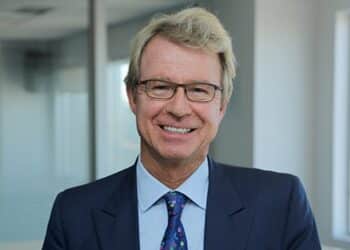
Russell Investments individual customers managing director Geoff Peck said in light of the shift in attitudes from SMSF trustees taking an individual approach to their finances, the demand for quality financial advisers was on the rise.

X

“There is a growing acknowledgement by SMSF trustees that they have a retirement gap and that’s good,” Peck told an audience at last week’s Russell Australia Investment Summit in Sydney.

“They do understand that they don’t actually have enough money in their SMSFs nor are they on track to deliver the amount of money they need to fund their retirement goals.”

In addressing the session “The changing role of SMSFs”, he quoted findings of the latest Russell SMSF report which found advisers admitted one-third of their SMSF trustee clients did not use them for investment strategies.

“They are using advisers for implementation, for satellites, for turbo-charging bits and pieces, but the core strategies are run by the SMSF trustee themselves,” he said.

“Another thing that has come through in the survey is that SMSF trustees now claim that the hardest thing involved in running their SMSF is finding a good professional investment adviser.”

He said the research found a “clear interest and demand for advisers in this space”.

SMSF trustees were also looking for strategic advice from investment professionals, rather than product advice, he said.

In terms of other changes to the SMSF sector, he forecast that more funds would emerge, there would be a greater focus on financial literacy and further regulatory change.

“We do see that there will be a continuing exodus out of some of the more traditional public offer superannuation arrangements towards SMSFs. So this tide is not going away; this is not a fad,” he said.

“We also see that financial literacy is a continual issue. ASIC and the government have identified this as an issue for the entire population, and hence they are starting to do things like introduce financial literacy into the schools program.

“Legislative change around the superannuation industry clearly creates uncertainty and that again creates opportunity for advisers.”

Russell Investments SMSF development manager Eric Quak offered further insight around changes to the sector, stating the changing generational attitudes would also provide opportunity for advisers.

“There is a generational change that’s occurring at the moment with more and more investors embracing the SMSF structure and control and flexibility that those structures offer,” Quak said.

“But moving forward, however, the younger generation – the Xers and the Yers – will look to also continue that control and flexibility that an SMSF offers and further embrace the SMSF structure.”

He said with the acceptance from the general public, the industry also had to move with the times.

“The industry is slowly coming to terms that no one institution actually controls that SMSF sector,” he said.

At present there was a shift in power away from the banks, life offices and corporates into the hands of mums and dads, he said.

“We see them [banks and corporates] taking non-traditional methods in order to retain market share, such as acquiring SMSF administrative businesses,” he said, possibly making reference to AMP’s purchase of Cavendish Group last month.

“As time goes on, both industry and the general population is accepting SMSFs and becoming more mainstream, however, ongoing regulatory change is actually hindering some of the success.”

In his view, Quak said it was probably fair to say regulatory change for SMSFs was going to continue.


Related Posts

Janus Henderson to go private following US$7.4bn acquisition

by Laura Dew
December 23, 2025

Global asset manager Janus Henderson has been acquired by Trian Fund Management and General Catalyst in a US$7.4 billion deal....

Australian Super targets $1trn within a decade

by Adrian Suljanovic
December 22, 2025

Australia’s largest superannuation fund has announced it is targeting $1 trillion in assets by 2035, up from its current size...

The biggest people moves of Q4

by Olivia Grace-Curran
December 22, 2025

InvestorDaily collates the biggest hires and exits in the financial service space from the final three months of 2025. Movements...

Leave a Reply Cancel reply

Your email address will not be published. Required fields are marked *

VIEW ALL
Promoted Content

Why U.S. middle market private credit is a powerful income solution for Australian institutional investors

In today’s investment landscape, middle market direct lending, a key segment of private credit, has emerged as an attractive option...

by Tim Warrick
December 2, 2025
Promoted Content

Is Your SMSF Missing Out on the Crypto Boom?

Digital assets are the fastest-growing investment in SMSFs. Swyftx's expert team helps you securely and compliantly add crypto to your...

by Swyftx
December 2, 2025
Promoted Content

Global dividends reach US$519 billion, what’s behind the rise?

Global dividends surged to a record US$518.7 billion in Q3 2025, up 6.2% year-on-year, with financials leading the way. The...

by Capital Group
November 18, 2025
Promoted Content

Why smaller can be smarter in private credit

Over the past 15 years, middle market direct lending has grown into one of the most dynamic areas of alternative...

by Tim Warrick, Managing Director of Principal Alternative Credit, Principal Asset Management
November 14, 2025

Join our newsletter

View our privacy policy, collection notice and terms and conditions to understand how we use your personal information.

Latest Podcast

Podcast

Relative Return Insider: MYEFO, US data and a 2025 wrap up

by Staff Writer
December 18, 2025
After more than two decades, InvestorDaily continues to be an institution that connects and influences Australia’s financial services sector. This influential and integrated media brand connects with leading financial services professionals within superannuation, funds management, financial planning and intermediary distribution through a range of channels, including digital, social, research, broadcast, webcast and events.

Subscribe to our newsletter

View our privacy policy, collection notice and terms and conditions to understand how we use your personal information.

About Us

  • About
  • Advertise
  • Contact
  • Terms & Conditions
  • Privacy Collection Notice
  • Privacy Policy

Popular Topics

  • Markets
  • Appointments
  • Regulation
  • Super
  • Mergers & Acquisitions
  • Tech
  • Promoted Content
  • Analysis

© 2025 All Rights Reserved. All content published on this site is the property of Prime Creative Media. Unauthorised reproduction is prohibited

No Results
View All Results
NEWSLETTER
  • News
  • Markets
  • Regulation
  • Super
  • M&A
  • Tech
  • Appointments
  • Podcast
  • Webcasts
  • Promoted Content
  • Events
  • About
  • Advertise
  • Contact Us

© 2025 All Rights Reserved. All content published on this site is the property of Prime Creative Media. Unauthorised reproduction is prohibited