
X
  • About
  • Advertise
  • Contact
Subscribe to our Newsletter
  • News
  • Markets
  • Regulation
  • Super
  • M&A
  • Tech
  • Appointments
  • Podcast
  • Webcasts
  • Promoted Content
  • Events
    • Super Fund of the Year Awards
    • Australian Wealth Management Summit
    • Australian Wealth Management Awards
    • Fund Manager of the Year Awards
    • Adviser Innovation Summit
    • ifa Excellence Awards
No Results
View All Results
  • News
  • Markets
  • Regulation
  • Super
  • M&A
  • Tech
  • Appointments
  • Podcast
  • Webcasts
  • Promoted Content
  • Events
    • Super Fund of the Year Awards
    • Australian Wealth Management Summit
    • Australian Wealth Management Awards
    • Fund Manager of the Year Awards
    • Adviser Innovation Summit
    • ifa Excellence Awards
No Results
View All Results
No Results
View All Results
Home News Markets

Secular stagnation, threat to long-run outcomes for asset values

Secular stagnation may still be the driving force impacting long-run outcomes for asset values, a market strategist has said.

by Maja Garaca Djurdjevic
September 19, 2022
in Markets, News
Reading Time: 3 mins read
Share on FacebookShare on Twitter

Franklin Templeton has pinpointed secular stagflation as a key source of concern for investors.

Defined as a prolonged period of chronic underinvestment in productive enterprises relative to the amount of savings in the economy, secular stagnation is said to have taken a backseat to inflation.

X

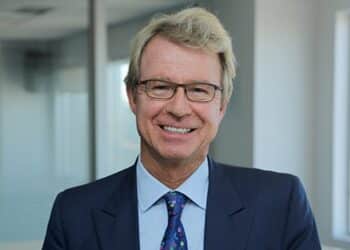
But, according to Stephen Dover, chief market strategist at the Franklin Templeton Investment Institute, there are “troublesome signs” that secular stagnation remains a credible description of broad economic trends.

“For example, gross fixed capital formation as a percentage of gross domestic product — a measure of total investment spending in the economy — has been declining in advanced economies since the 1970s and, despite some recovery over the past decade, remains below average investment rates seen in the 1980s, 1990s or early 2000s,” Mr Dover explained.

“Even in China — the world champion of capital expenditures over the past quarter century — rates of investment peaked nearly a decade ago and have been gradually receding ever since. The world cannot be characterised as experiencing a boom in capital expenditures. Rather, large swathes of the global economy are seeing evidence of weak capital formation, a story that may also be unfolding in China,” Mr Dover added.

More timid capital expenditures, Mr Dover explained, may come as a surprise to many given the glitzy inventions of the last few decades; most of these are not enabling the masses to produce more with less — the essence of productive investment.

Moreover, the need to rein in and ultimately reduce mountains of public debt created during the pandemic leads to further drag on total spending in the economy.

The overall impacts of secular stagnation are concerning, Mr Dover said, and flagged the real possibility that “global growth will slow to a weaker trend rate of growth”.

Mr Dover also predicted that secular stagnation could see very low, perhaps even negative, equilibrium real interest rates.

That, he explained, is because to generate full employment, borrowing costs must be “sufficiently low” to induce business investment that might not otherwise take place.

“Although the Federal Reserve and other central banks today are now hiking interest rates to lower current high rates of inflation, they cannot completely ignore the implications of very low long-run equilibrium interest rates,” Mr Dover said.

“Slowing demand and curbing spiking inflation today are necessary, but overdoing things could be very damaging. The interest rate required to slow growth and lower inflation could be much lower than a federal funds’ rate of 3.5 to 4.0 per cent, which is increasingly the consensus view. Hiking rates to those levels could be overkill, in my view,” he continued.

As for the implications for capital markets, Mr Dover warned that weak GDP growth implies that profit growth will also be pedestrian.

“Growth styles which favour the relatively few companies that can sustain high earnings over time appear likely once again to outperform value and cyclical styles that offer fewer profit opportunities in a world of secular stagnation,” Mr Dover said.

Finally, he noted, “low interest rates may again spur unproductive speculation in the customary places, including property markets or cryptocurrencies, or in new ones devised to capture the allure of high returns”.

“This conclusion that secular stagnation may lead to a focus on longer-duration assets may be surprising to some, but highlights the constant push and pull between economic forces and capital markets”. 

Related Posts

Strong investment banking boosts Morgan Stanley outlook

by Olivia Grace Curran
January 16, 2026

Morningstar has lifted Morgan Stanley valuation after strong earnings beat, as banks benefit from surging dealmaking, trading strength and upbeat...

BlackRock assets hit record US$14tn in 4Q

by Georgie Preston
January 16, 2026

The world’s largest asset manager has reported record assets of US$14 trillion in the December quarter amid its ongoing push...

Morningstar bolsters managed portfolios team with senior appointments

by Adrian Suljanovic
January 16, 2026

The firm has strengthened its managed portfolios business with two senior appointments, expanding national sales leadership and investment specialist capability....

Leave a Reply Cancel reply

Your email address will not be published. Required fields are marked *

VIEW ALL
Promoted Content

Why U.S. middle market private credit is a powerful income solution for Australian institutional investors

In today’s investment landscape, middle market direct lending, a key segment of private credit, has emerged as an attractive option...

by Tim Warrick
December 2, 2025
Promoted Content

Is Your SMSF Missing Out on the Crypto Boom?

Digital assets are the fastest-growing investment in SMSFs. Swyftx's expert team helps you securely and compliantly add crypto to your...

by Swyftx
December 2, 2025
Promoted Content

Global dividends reach US$519 billion, what’s behind the rise?

Global dividends surged to a record US$518.7 billion in Q3 2025, up 6.2% year-on-year, with financials leading the way. The...

by Capital Group
November 18, 2025
Promoted Content

Why smaller can be smarter in private credit

Over the past 15 years, middle market direct lending has grown into one of the most dynamic areas of alternative...

by Tim Warrick, Managing Director of Principal Alternative Credit, Principal Asset Management
November 14, 2025

Join our newsletter

View our privacy policy, collection notice and terms and conditions to understand how we use your personal information.

Latest Podcast

Podcast

Relative Return Insider: Navigating a volatile 2026 market outlook

by Keith Ford
January 15, 2026
After more than two decades, InvestorDaily continues to be an institution that connects and influences Australia’s financial services sector. This influential and integrated media brand connects with leading financial services professionals within superannuation, funds management, financial planning and intermediary distribution through a range of channels, including digital, social, research, broadcast, webcast and events.

Subscribe to our newsletter

View our privacy policy, collection notice and terms and conditions to understand how we use your personal information.

About Us

  • About
  • Advertise
  • Contact
  • Terms & Conditions
  • Privacy Collection Notice
  • Privacy Policy

Popular Topics

  • Markets
  • Appointments
  • Regulation
  • Super
  • Mergers & Acquisitions
  • Tech
  • Promoted Content
  • Analysis

© 2026 All Rights Reserved. All content published on this site is the property of Prime Creative Media. Unauthorised reproduction is prohibited

No Results
View All Results
NEWSLETTER
  • News
  • Markets
  • Regulation
  • Super
  • M&A
  • Tech
  • Appointments
  • Podcast
  • Webcasts
  • Promoted Content
  • Events
    • Super Fund of the Year Awards
    • Australian Wealth Management Summit
    • Australian Wealth Management Awards
    • Fund Manager of the Year Awards
    • Adviser Innovation Summit
    • ifa Excellence Awards
  • About
  • Advertise
  • Contact Us

© 2026 All Rights Reserved. All content published on this site is the property of Prime Creative Media. Unauthorised reproduction is prohibited