
Investors would be “silly” to think digital assets and products won’t soon play a part in everyone’s daily lives says the Australian MD of a new crypto entrant.
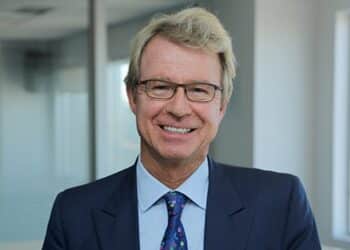
As global crypto regulation begins to crystallise, KuCoin Exchange’s new Australian managing director, James Pinch, says the firm is positioning itself at the forefront of a more mature digital-asset landscape – both locally and globally.
“Not just in Australia, but also globally – that landscape’s looking a lot clearer,” he told InvestorDaily.
Offshore exchange KuCoin has been operating since 2017 but now officially has “boots on the ground” in Australia – and has registered as a digital currency exchange under AUSTRAC.
Commenting on its future plans, Pinch said the firm aims to lead the charge in local regulation.
“We’re hoping to create a bit of certainty for the market around what these things should actually look like from a traditional financial services perspective.”
KuCoin’s advantage, Pinch says, is having products in market that no one else does thanks to its partnership with AFSL Echuca Trading.
“We’re the only exchange in Australia providing retail perps [perpetual futures]. It’s been a pretty large undertaking.
“That’s where I’ve been uniquely brought in – and my team – to make sure that these products are coming back to the market but in a really compliant way.”
Bringing deep experience across FX, CFDs and traditional financial services – including his recent role as risk and compliance committee member and responsible manager at OKX – Pinch’s appointment signals KuCoin’s intent to build a strong footing in the market.
KuCoin is also exploring regulated, institution-ready infrastructure.
“We’re pretty engaged with a lot of the guys that are probably industry adjacent, but on a more sort of bigger B2B nature. There’s other licensees, family offices that are heavily involved in the products. When we start to have those unique offerings, it’s quite easy for us to be able to sell those products,” Pinch said.
“We’re having conversations with people about potentially white label versions of KuCoin, there’s also conversations about repurposing of some of the perps products.”
The push comes as institutional adoption dominates global headlines. In the US on 1 December, the world’s second-largest asset manager Vanguard officially opened crypto ETF trading to its 50 million clients – a reversal of its long-standing crypto ban.
Commenting on Vanguard’s move, ETF Shares founder and CEO Cliff Man said more asset managers are embracing crypto ETFs because the wrapper brings accessibility and stronger investor protections.
“The timing of Vanguard’s move isn’t surprising given the increasingly crypto-friendly policy environment in the US.”
However, Man believes bitcoin remains fundamentally speculative, with its value anchored in peer trust rather than economic output.
“Investors should recognise that an ETF wrapper improves access but doesn’t change the asset’s underlying nature.”
A day later, Bank of America announced it is now recommending its wealth management clients allocate up to 4 per cent of their portfolio to bitcoin and crypto.
On 3 December, BlackRock CEO Larry Fink called bitcoin an “asset of fear” and publicly admitted he was wrong about crypto at the New York Times DealBook Summit.
“You own bitcoin because you’re frightened of your physical security, you own it because you’re frightened of your financial security. The long-term reason you own it is because of the debasement of financial assets because of deficits,” he said.
BlackRock’s iShares Bitcoin Trust (IBIT), launched in January 2024, is now the largest US-listed bitcoin ETF and the firm’s most profitable product.
Fink acknowledged the recent dip in BTC’s price, noting it’s the third such decline since IBIT’s creation.
“Even the movement in the last week, and we’ve had about a 20, 25 percent drawdown, and this is the third time since IBIT was created, our ETF … You see these shifts and they’re actually pretty non-correlated shifts.
“If you bought it for a trade, it’s a very volatile asset. You’re going to have to be really good at market timing, which most people aren’t. If you’re buying it as a hedge against all your hope, then it has a meaningful impact on a portfolio,” he said.
Meanwhile, global research from Brava Finance reveals 89 per cent of institutional investors and wealth managers surveyed are nervous about investing solely in bitcoin following its recent surge to an all-time high of US$126,0000 before pulling back.
CEO Graham Cooke said institutional investors and wealth managers increasingly view digital assets as a credible alternative for diversification and risk-adjusted returns.
“This digital assets market is maturing, with a growing number of digital assets – such as stablecoins – being considered as both robust and stable.
“An improving regulatory environment, improved liquidity and a proliferation of reliable digital asset investment vehicles such as ETPs, means that professional investors have many options to choose from.”