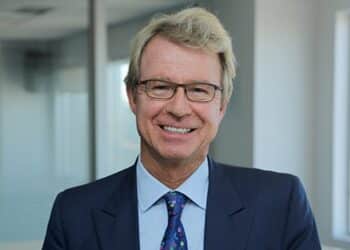

Australia’s financial services sector needs to increase its exposure to a greater number of investments and investment classes if the country’s superannuation system is to experience better returns, MLC’s chief executive has said.
Steve Tucker told an audience at yesterday’s American Chamber of Commerce in Australia lunch in Sydney that more opportunity needs to be given to investors outside of providing capital and income protection products, and giving people exposure to markets if the industry is going to assist with Australia’s retirement adequacy and longevity challenges.
“We’ve got to get more exposure to different types of investments and investment categories and give them the chance to develop better returns,” he said.
“So I think superannuation is an opportunity to bring to life some of the innovative ideas that Australia’s science and technology communities are developing today.”
Tucker said historically, Australia has not done very well in keeping scientific and technology advancements on home soil. He provided the examples of the black box flight recorder and wifi, both inventions created in Australia but monetised offshore.
“So is there a role here for super to work with investors, venture capitalists and government to ensure the fruits of our ingenuity are not monetised just offshore? And there’s a selfish reason for this, I want my superannuation members to get good returns,” he said.
“I think the Australian country needs to develop these things in these industries locally.”
Tucker said there is an opportunity to “match these pools of assets” with what superannuants want with these Australian innovations.
He said deeper thinking is also needed around superannuation and infrastructure investment, further development of the corporate and government bond market as well as the bank term deposit and cash options and venture capital exposure and private equity.
“The growth debate is, is the superannuation $1.4 trillion, going to $5 trillion going to be enough to help with nation building? The answer is I hope so. But the structures that are in place today probably need some tweaking and some change,” he said.
“Superannuation investors in funds want long-term infrastructure assets. The challenge is getting the balance between the risk of the development of the infrastructure program right with the returns to the investor.
“So there is work to be done, particularly on PPPs [public-private partnerships] and making sure that the development risk is managed and the long-term investment is in the interest of the superannuation members.”
Tucker said a challenge also exists in getting the superannuation system to look after the different needs of all Australians.
“First thing we need to do is look at the investment strategies that are being deployed,” he said.
Have we got the right investment strategies and range of options that need to be provided, particularly for the [baby] boomers?
“Have we got the right structures and products to manage liquidity and cash flows as the boomers draw down? We have to develop new solutions to meet the different needs, so there is an opportunity for new product design.”
Tucker said at present, the risk that retirees or pre-retirees are three-fold: adequacy, longevity, and market risk.
“In Australia we’ve got too many people retiring with not enough money. The government’s response to that is to increase the SG [Superannuation Guarantee], unfortunately also capping some of the contributions that other people can put in at the same time. But there is a challenge in having enough money,” he said.
Tucker said another concern is the country’s retiree or pre-retiree super exposure to the equity markets.
The average user in Australia under the default fund system has about 60 per cent invested in equity and growth assets, with the rest of the world average around 30 per cent.
“We do have more exposure to growth assets than in the past and there is a lot of dispute and debate about whether it should come right down, is it too much risk for people to bear? So the question is should we get out of equities? Let’s not demonise equities,” he said.
“Let’s remember that equities as a growth asset class gives superior returns over time – notwithstanding the GFC [global financial crisis], that will happen.”
In light of this, Tucker said telling retirees and pre-retirees to place their money in cash is also not the answer.
“We have to find a system where we can give people exposure to markets and give them protection. So I think we’re about to see a revolution in retirement incomes and savings. It’s happening right now, it’s not just us.”
In line with Tucker’s revolution forecast, MLC is close to launching capital and income protected products under the company’s Masterkey brand.
“They are called MasterKey Investment Protection. What the new structures will do will allow clients to have some exposure to markets, to buy protection in the form of an insurance policy that sits across their investments,” he said.
“But as markets continue to improve, they can ratchet their guarantees and they can participate in market growth but their capital is protected on the downside or their income is protected overtime.”
While acknowledging that similar products have been available in the United States and, on a smaller scale, in Australia, he said they will “revolutionalise” the way people think about retirement.