
Inflation risks have intensified as big banks remain divided over a February rate hike.
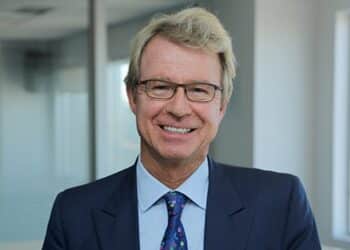
GSFM investment specialist Stephen Miller has warned inflation is a “clear and present danger”, arguing the Reserve Bank of Australia (RBA) is increasingly likely to lift rates at its February meeting, even as the big four banks remain split on the outcome.
The Commonwealth Bank of Australia (CBA) and National Australia Bank (NAB) have expected the RBA to lift the cash rate by 25 basis points, citing persistent inflation pressures and resilient economic conditions.
By contrast, ANZ and Westpac have continued to expect the RBA to hold rates steady, arguing policymakers may wait for clearer evidence that inflation is not easing before tightening further.
For Miller, he said he has “had a hard time” believing that a rate hike is incoming.
“I’ve had a hard time convincing myself that the Reserve Bank of Australia will raise the policy rate when it meets on 10 February.
“Markets appeared to share that judgement. At the time of writing markets rated the probability of an upward adjustment to the policy rate at only around 30 per cent.”
Miller said heightened global uncertainty had initially argued for policy caution, but the inflation outlook has since shifted his view.
The latest CPI data for November from the Australian Bureau of Statistics (ABS) showed inflation rose 3.4 per cent, down from 3.8 per cent in the previous month, undershooting analyst expectations of 3.6 per cent.
“I had thought that with a greater than usual amount of uncertainty clouding the global economic landscape that the discretion of no change would prevail over the valour of a policy rate increase,” he said.
“However, I’m now wondering if indeed that discretion may dictate a hike at the February meeting and the more valorous (if less advisable) path may be to leave the policy rate unchanged.”
He said inflation pressures have been exacerbated by a lack of meaningful government action.
“I am increasingly convinced that inflation is a clear and present danger, one that is only exacerbated by government inaction – probably much to the chagrin of the RBA.”
Miller cautioned against reading too much into recent inflation data, saying it remained inconsistent with the RBA’s target. He also noted recent comments from RBA deputy governor Andrew Hauser, who warned against treating any single inflation outcome as determinative.
“Much was made of what looked to be a better November inflation read. But while that November inflation read may have been better than feared it is still difficult to see December quarterly trimmed-mean inflation number that is low enough (say below 0.8 per cent in quarterly terms or 3.2 per cent in annual terms) to at the very least provoke a meaningful discussion around the requirement for a policy rate increase,” he said.
However, Miller said the underlying arithmetic remained persuasive.
“Even an extremely modest increase in the December month trimmed-mean CPI of a little above 0.2 per cent implies a quarterly outcome somewhere between 0.8 and 0.9 per cent which is enough to drive the annual rate to 3.3 per cent,” he said.
“The current RBA forecast is 3.2 per cent.”
As well as his concerns around inflation, Miller said a rebound in consumer spending and a labour market in relatively good shape have further tilted the balance of risks.
“With a strong rebound evident in consumer spending and the labour market looking to be in relatively good shape, this leaves the balance of probabilities favouring a policy rate rise,” he said.
“Indeed, by not doing so the RBA may leave itself facing the prospect of confronting an even more aggressive approach down the track.”
He also pointed to structural and policy factors that have entrenched inflation pressures.
“That has seen unit labour cost growth run at around 5 per cent, something manifestly irreconcilable with the RBA’s current 2 to 3 per cent inflation target,” Miller said.
“Fiscal policy too (at State and Federal level) has done little to attack the fundamentals of inflation pressure. Indeed it has tended to exacerbate inflation pressures.”
“That leaves me thinking that the RBA should raise the policy rate when it meets on February 10th,” Miller said.
“I suspect it will.”