Economists warn that escalating uncertainty from the President’s unpredictable stance on tariffs is already weighing on global business sentiment. With no clear resolution in sight, recent surveys suggest firms are beginning to stall activity, raising the risk of broader economic spillovers.
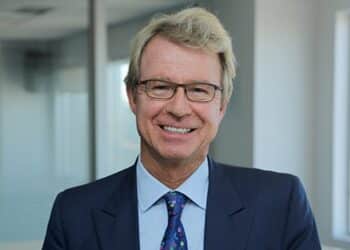
Uncertainty around tariff policy and its wider economic impact could extend to some Australian companies, AMP chief economist Shane Oliver said in a market note on Thursday.
In some cases, this could lead to delays in investment decisions, further dampening already soft business investment in Australia, he said.
Highlighting how the flip-flopping has given rise to the TACO acronym that “Trump always chickens out”, Oliver said the trouble is that the resilience in markets and Trump’s annoyance with the “chicken” label risk the President ramping up pressure again.
“This still has a long way to go before it’s resolved, particularly with the 90-day deadlines approaching,” Oliver said.
“In the meantime, a new worry is emerging around worsening US public debt, with concerns about a crisis and upwards pressure on bond yields.”
On the latter, the chief economist explained that while fears about too much debt have been around ever since debt was invented, projections by the US Congressional Budget Office indicate the tax cut bill will keep the budget deficit around 7 per cent of gross domestic product (GDP) – well above the 3 per cent of GDP necessary to stabilise the debt to GDP ratio.
“Tariff revenue and some savings on spending are providing only a partial offset to the tax cuts. Which means the debt to GDP ratio will keep rising – taking gross federal debt from around 124 per cent of GDP to around 155 per cent of GDP by 2035,” Oliver said.
“Along with current bond yields, this will mean that net interest costs as a share of revenue and GDP will rise further into record territory.”
The last time US federal interest payments hovered around 3 per cent of GDP, it triggered a period of fiscal austerity that, combined with falling inflation and interest rates, helped ease the pressure. This time, however, Oliver noted that US policymakers appear more inclined to expand the deficit further, pointing to the passage of the OBBBA bill as a case in point.
“The falling US dollar suggests foreign investors may be becoming less keen on buying US Treasuries and hence financing ever-rising US public debt, which in turn runs the risk of even higher US bond yields,” Oliver said.
According to Oliver, while getting the budget deficit under control can be quite difficult if the objective is to cut taxes, there are several reasons “not to get too gloomy”.
Namely, the chief economist noted the US is unlikely to see a “full-blown public debt crisis” but cautioned that there is a high risk that the combination of a deteriorating outlook for US public debt along with Trump’s erratic policies will see global investors demand a higher risk premium to invest in US shares, bonds and the US dollar.
“I suspect this is likely to be a slow burn and for now US tech and AI dominance will serve as a powerful offset. But it means ongoing bouts of high uncertainty and volatility, particularly given that right now the US share market is offering around a zero risk premium over bonds – as measured by the gap between the forward earnings yield and the 10-year bond yield,” he said.
As for Australia, Oliver alerted to “several implications”.
“First, the good news is that our level of public debt is low. However, our good luck on the back of high commodity prices could end at some point,” he said.
“Second, some worry that rising US bond yields could mean higher Australian bond yields and hence fixed mortgage rates, but this seems unlikely if it reflects investors’ desire for a higher risk premium on US assets and Australia comes to be seen as relatively safer,” Oliver added.
“Third, another round of weakness in the US sharemarket on the back of tariff and public debt worries would flow through to Australian shares – albeit we may fall by less as we saw in April.”
Finally, the chief economist suggested the US dollar may be losing its traditional “safe haven” status, meaning it could fall, rather than rise, in times of crisis. As a result, he noted, the Australian dollar may act less as a shock absorber, declining less than it typically would during periods of market stress.
“Time will tell, but if this is the case then more of the burden could fall on the RBA to help protect the economy in rough times by cutting interest rates by more.”