
Driven by US policy tailwinds announced since April, the fund manager has argued both global and US economies are on a growth pathway heading into next year.
According to Ausbil, the 2026 outlook is much stronger, boosted by US tax cuts, industrial investment incentives, and US Federal Reserve (Fed) rate cuts announced since 2 April.
In its outlook for the coming year, the firm added that deregulation, lower oil prices, reduced core inflation, tariff exemptions, and the Fed’s careful balancing of unemployment and inflation are making US business conditions easier.
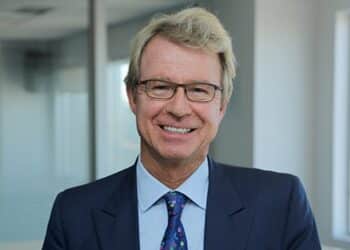
Ausbil chief economist Jim Chronis said these factors are creating especially strong conditions for Australia.
“Looking ahead, we see a supportive macroeconomic environment for the Australian economy, driving earnings growth and favouring investment in equities,” Chronis said.
He said Ausbil sees US growth rising to 2.1 per cent in 2026, while Europe stays at 1.4 per cent and China at 4.5 per cent. Meanwhile, the firm forecast Australia’s growth to pick up to a “robust” 2.8 per cent.
According to the firm, this outlook is supported by Australia’s relative insulation from tariffs, strengthened by its favourable position under the bilateral critical minerals and rare earths framework reached with the US in October.
“The material risk of A$214 billion in direct exports to China is in resource raw material commodities which will be required as an input in additional Chinese stimulus measures,
“Fortunately, we continue to benefit from our growing export exposure of A$258 billion to the Indo-Pacific region of fourteen countries (which excludes China). This region is experiencing robust real growth rates in the range of 5 per cent to 6 per cent,” Chronis added.
Moreover, he noted that following the Fed’s final cash rate cut of the year, US and Australian rates are continuing to converge. In turn, he said Ausbil expects the dollar to hold near 65 cents with low volatility and a mild upward trend through 2026.
“The Australian trade weighted basket of currencies should continue to be range bound as commodity prices remain elevated and resilient,” Chronis said.
Meanwhile, he said the June quarter national accounts confirmed a continued, gradual shift in economic activity from the public to the private sector, a transition that began in the September quarter of 2024.
At a Senate hearing in October, Reserve Bank governor Michele Bullock also stated that she expects the private sector to increasingly take the lead in driving economic growth.
Longer term structural drivers
Ausbil also highlighted several global long-term structural drivers that could create growth opportunities and new value chains across sectors.
These included an increased commitment to military spending globally, increased investment in infrastructure to accommodate the growth in artificial intelligence (AI), ongoing investment to secure independent energy security, and increased demand for electricity over carbon-based energy.
“Carbon free energy sources, primarily from renewables, are expected to become the dominant force in global energy systems, reducing reliance on fossil fuels,” Chronis elaborated.
Betashares has also flagged the defence sector as a strong area going forward, similarly pointing to the rise in global defence spending – not just in Europe, but across markets worldwide.
Tom Wickenden, an investment strategist at the firm, pointed to regulatory approval for Korea’s major defence group Hanwha to lift its stake in Australian shipbuilder Austal as evidence that momentum is extending beyond the region.
“With defence spending targets often tied to rising GDP, we see global defence expenditure as a multi-decade trend that remains under-represented in many Australian portfolios,
“The growing activity in the sector presents a long-term growth opportunity, and we expect M&A to continue in various forms as spending expands,” Wickenden said.