
X
  • About
  • Advertise
  • Contact
  • Events
Subscribe to our Newsletter
  • News
    • Markets
    • Regulation
    • Super
    • M&A
    • Tech
    • Appointments
  • Podcast
  • Webcasts
  • Video
  • Analysis
  • Promoted Content
No Results
View All Results
  • News
    • Markets
    • Regulation
    • Super
    • M&A
    • Tech
    • Appointments
  • Podcast
  • Webcasts
  • Video
  • Analysis
  • Promoted Content
No Results
View All Results
No Results
View All Results
Home News Regulation

Global recession ‘more likely than not’, warns leading economist

A leading economist has warned that a global recession is likely by year-end, blaming the Trump-era trade upheavals and ongoing uncertainty in global tariff policy for destabilising investment and consumption.

by Maja Garaca Djurdjevic
April 24, 2025
in News, Regulation
Reading Time: 4 mins read
Share on FacebookShare on Twitter

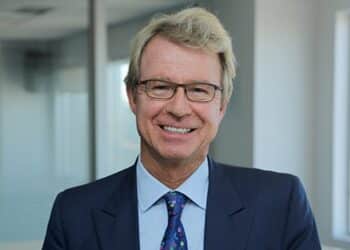
In his latest commentary, GSFM investment specialist Stephen Miller said while recent signs of de-escalation between the US and China may slightly reduce the risk, the broader impact of fractured trade relations and “stagflation-lite” conditions will leave central banks, including the Reserve Bank (RBA), scrambling to soften the blow.

While US President Donald Trump appears to be softening his stance on tariffs, including those imposed on China, in Miller’s opinion, the willingness of some countries to “do deals” with the US will merely result in “nth best” outcomes for the architecture that underpins international trade.

X

“At best, such agreements will only mitigate rather than eradicate the ‘stagflation-lite’ implications of the ‘Liberation Day’ announcement,” Miller said.

“For one thing, higher prices and lower activity growth relative to the pre-existing baseline (prior to the Trump ascendancy) will still result. That certain countries and trading blocs – China, the EU and Canada – may still retaliate only compounds the likely global stagflation-lite consequences. Such measures put the global economy in circular firing squad mode.”

Turning to the “erratic character” with which Trump’s proposals have been implemented, Miller said “an uncertain economic environment will persist for an extended period”.

“Businesses will put investment plans on ice and households will likely reduce consumption expenditure and increase savings,” he said.

Miller opined that the fact that tariffs will mean an “exacerbation of the short-term “stickiness” in inflation” will only limit the extent to which some central banks can reduce policy rates in response to declining economic activity growth.

“Bond yields, too, may not be as responsive to central bank rate cuts,” the investment specialist said.

“The already gargantuan US budget deficit requires massive bond issuance to fund it at a time when bond markets are spooked by the inflation implications of tariffs and foreign central banks are reluctant to place increasing amounts of their foreign exchange reserves in US Treasuries.

“Recent developments in Germany also imply a greater deficit proclivity, which again, will require bond issuance to fund.”

Locally, Miller noted that Australia’s “eschewal of retaliatory tariff measures” may give the RBA a less-complicated path to attacking the consequences of a global trade war.

“The absence of retaliatory measures will mean a mitigation of the inflation part of the global ‘stagflation-lite’ scenario, allowing the RBA to cut rates and, if need be, cut aggressively to forestall the inevitable decline in economic growth,” he said.

“I think it is likely in that context that the RBA will cut the policy rate in May.”

In fact, Miller said there are indicators that the RBA is already “over-achieving” on inflation.

“That fact combined with the likelihood of global recession may well see the policy rate with a ‘2’ handle by year-end,” he said.

“A cooling of trade tensions with China might mean that policy rate reductions are of a lesser magnitude, but they are still coming. That may sound like good news. The bad news is, we’ll need it.”

The International Monetary Fund (IMF) issued a sobering assessment of the global economic landscape in its latest World Economic Outlook earlier this week, dramatically revised after Trump’s 2 April announcement of sweeping tariff measures.

“This April 2025 World Economic Outlook was put together under exceptional circumstances,” said Pierre-Olivier Gourinchas, economic counsellor at the IMF, speaking ahead of the global gathering of finance ministers in Washington.

“The April 2 Rose Garden announcement forced us to jettison our projections – nearly finalised at that point – and compress a production cycle that usually takes more than two months into less than 10 days.”

According to the IMF, global tariff rates are at “centennial highs” and will push global growth down to 2.8 per cent this year and 3 per cent next year.

However, unlike Miller, the IMF believes the global economy is still not in recession territory, though it noted risks have significantly risen.

“While we are not projecting a global downturn, the risks it may happen this year have increased substantially, from 17 per cent projected back in October to 30 per cent now,” Gourinchas said. “An escalation of trade tensions would further depress growth.”

Related Posts

Australia’s funds rise yet remain small on global stage

by Adrian Suljanovic
December 5, 2025

Australia’s top super funds have climbed in global rankings but their assets pale in comparison to the world’s dominant asset...

Investors brace for crucial central bank decisions

by Olivia Grace-Curran
December 5, 2025

Global markets are entering a critical phase as traders prepare for upcoming central bank decisions from the Reserve Bank of...

Traders rotate from banks as speculative trades surge

by Adrian Suljanovic
December 5, 2025

Investors moved from banks into blue chips and speculative names in November as trading activity fell across AUSIEX accounts. Australia’s...

Leave a Reply Cancel reply

Your email address will not be published. Required fields are marked *

VIEW ALL
Promoted Content

Why U.S. middle market private credit is a powerful income solution for Australian institutional investors

In today’s investment landscape, middle market direct lending, a key segment of private credit, has emerged as an attractive option...

by Tim Warrick
December 2, 2025
Promoted Content

Is Your SMSF Missing Out on the Crypto Boom?

Digital assets are the fastest-growing investment in SMSFs. Swyftx's expert team helps you securely and compliantly add crypto to your...

by Swyftx
December 2, 2025
Promoted Content

Global dividends reach US$519 billion, what’s behind the rise?

Global dividends surged to a record US$518.7 billion in Q3 2025, up 6.2% year-on-year, with financials leading the way. The...

by Capital Group
November 18, 2025
Promoted Content

Why smaller can be smarter in private credit

Over the past 15 years, middle market direct lending has grown into one of the most dynamic areas of alternative...

by Tim Warrick, Managing Director of Principal Alternative Credit, Principal Asset Management
November 14, 2025

Join our newsletter

View our privacy policy, collection notice and terms and conditions to understand how we use your personal information.

Latest Podcast

Podcast

Relative Return Insider: GDP rebounds and housing squeeze getting worse

by Adrian Suljanovic
December 5, 2025
After more than two decades, InvestorDaily continues to be an institution that connects and influences Australia’s financial services sector. This influential and integrated media brand connects with leading financial services professionals within superannuation, funds management, financial planning and intermediary distribution through a range of channels, including digital, social, research, broadcast, webcast and events.

Subscribe to our newsletter

View our privacy policy, collection notice and terms and conditions to understand how we use your personal information.

About Us

  • About
  • Advertise
  • Contact
  • Terms & Conditions
  • Privacy Collection Notice
  • Privacy Policy

Popular Topics

  • Markets
  • Appointments
  • Regulation
  • Super
  • Mergers & Acquisitions
  • Tech
  • Promoted Content
  • Analysis

© 2025 All Rights Reserved. All content published on this site is the property of Prime Creative Media. Unauthorised reproduction is prohibited

No Results
View All Results
NEWSLETTER
  • News
  • Markets
  • Regulation
  • Super
  • M&A
  • Tech
  • Appointments
  • Podcast
  • Webcasts
  • Promoted Content
  • Events
  • About
  • Advertise
  • Contact Us

© 2025 All Rights Reserved. All content published on this site is the property of Prime Creative Media. Unauthorised reproduction is prohibited