
X
  • About
  • Advertise
  • Contact
  • Events
Subscribe to our Newsletter
  • News
    • Markets
    • Regulation
    • Super
    • M&A
    • Tech
    • Appointments
  • Podcast
  • Webcasts
  • Video
  • Analysis
  • Promoted Content
No Results
View All Results
  • News
    • Markets
    • Regulation
    • Super
    • M&A
    • Tech
    • Appointments
  • Podcast
  • Webcasts
  • Video
  • Analysis
  • Promoted Content
No Results
View All Results
No Results
View All Results
Home News Markets

Survival of the fittest: Rising fees and outflows force asset managers to adapt or exit

The asset management landscape is set for a shake-up, with smaller funds likely to either merge with partners or close their doors altogether.

by Rhea Nath
September 23, 2024
in Markets, News
Reading Time: 4 mins read
Share on FacebookShare on Twitter

Fee pressures, net outflows, and the rise of ETFs, along with superannuation funds internalising investment management, are driving a decline in the number of Australian asset managers.

A number of funds have confirmed they are closing shop in recent months, including small caps manager NovaPort Capital in May, ethical fund manager Ethical Partners in July, and last week, specialist income manager Wheelhouse Investment Partners.

X

Others have been forced to merge, particularly those of a smaller scale.

Platinum Asset Management recently confirmed it received an unsolicited, non-binding proposal from Regal to acquire all shares it doesn’t already own through a scheme of arrangement.

Additionally, reports indicate that competitors such as Challenger and Wilson Asset Management may also be eyeing the fund manager.

Other M&A activity that took place this year includes Regal’s bid for Merricks Capital and Australian Ethical’s acquisition of Altius Asset Management.

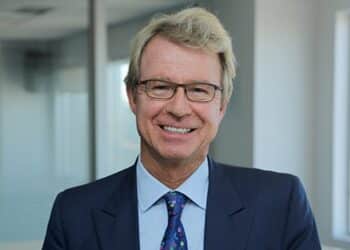
Reflecting on these changes, Shaun Ler, equity analyst at Morningstar, noted that while rate cuts may provide short-term cyclical tailwinds for the sector – potentially extending into fiscal year 2025 – asset managers, particularly those that emerged in a low-interest environment, will face significant long-term challenges.

He told InvestorDaily that the low-interest rate environment led to funds sprouting up “like mushrooms”.

“There are so many of them because of supportive interest rates and generally the bull markets, but ever since interest rates have risen – and I don’t think they will return to historical lows – I think that will present challenges to a lot of asset managers,” he said.

“A lot of them tend to run similar strategies, run using similar investment styles, a lot of them also cater to niche clients.”

He warned that underperforming funds might close, while the sector will likely continue to see mergers and acquisitions among both small and large firms.

Despite his forecast, Ler underlined that the outlook for the landscape isn’t entirely grim. In fact, he believes the challenges will drive asset managers to adapt and innovate.

This will mean aligning their remuneration structures to more “shareholder friendly” structures, “cutting the fat” to rationalise their cost base, and diversifying their offerings, distribution channels, and products.

“I think there’s always room for active management. The demand will always be there, they have a role to play. But they really need to reinvent themselves,” Ler said.

“As an asset manager, you can still do business, but you need to be brilliant.

“Established organisations, old school fund managers, tend to have that old school mentality about how exclusive their products are or how sticky their clients are. I think that needs to change and managers really need to adapt.”

Warning for M&A seekers

Ler also had a warning for fund managers seeking merger partners, highlighting in a recent note that “not all fund manager consolidations have gone smoothly”.

Particularly, he pointed to Perpetual’s 2023 acquisition of Pendal, explaining that the two firms were too similar in style.

“When funds management companies try to merge, they need to find something truly different from them and by that, I mean asset classes, distribution team, and investment styles,” Ler said.

“When you acquire someone else, you need to make sure there are revenue synergies – as in you can put out new products, they’re quite different from yours, there’s no overlap between each other, and you can extract cost efficiencies from them. Those have high amounts of success.

“If you look at Perpetual’s example, being very diversified, they subsequently went to acquire Pendal which is quite similar to them in terms of products. I don’t think that would be value accretive.”


Related Posts

Banks flag February rate hike as RBA ‘on a knife edge’

by Adrian Suljanovic
December 17, 2025

Major banks have shifted to expect a February rate hike after stronger growth and stubborn inflation raised policy risks. Australia’s...

Investors most bullish since 2021 but BofA flags private credit risk

by Laura Dew
December 17, 2025

Going into 2026, investors are the most bullish they have been in 3.5 years, according to Bank of America. The...

Australian Super’s CIO to depart from role

by Laura Dew
December 17, 2025

Australian Super’s chief investment officer, Mark Delaney, is to step down from the fund after more than 25 years in...

Leave a Reply Cancel reply

Your email address will not be published. Required fields are marked *

VIEW ALL
Promoted Content

Why U.S. middle market private credit is a powerful income solution for Australian institutional investors

In today’s investment landscape, middle market direct lending, a key segment of private credit, has emerged as an attractive option...

by Tim Warrick
December 2, 2025
Promoted Content

Is Your SMSF Missing Out on the Crypto Boom?

Digital assets are the fastest-growing investment in SMSFs. Swyftx's expert team helps you securely and compliantly add crypto to your...

by Swyftx
December 2, 2025
Promoted Content

Global dividends reach US$519 billion, what’s behind the rise?

Global dividends surged to a record US$518.7 billion in Q3 2025, up 6.2% year-on-year, with financials leading the way. The...

by Capital Group
November 18, 2025
Promoted Content

Why smaller can be smarter in private credit

Over the past 15 years, middle market direct lending has grown into one of the most dynamic areas of alternative...

by Tim Warrick, Managing Director of Principal Alternative Credit, Principal Asset Management
November 14, 2025

Join our newsletter

View our privacy policy, collection notice and terms and conditions to understand how we use your personal information.

Latest Podcast

Podcast

Relative Return Insider: RBA holds, Fed cuts and Santa’s set to rally

by Staff Writer
December 11, 2025
After more than two decades, InvestorDaily continues to be an institution that connects and influences Australia’s financial services sector. This influential and integrated media brand connects with leading financial services professionals within superannuation, funds management, financial planning and intermediary distribution through a range of channels, including digital, social, research, broadcast, webcast and events.

Subscribe to our newsletter

View our privacy policy, collection notice and terms and conditions to understand how we use your personal information.

About Us

  • About
  • Advertise
  • Contact
  • Terms & Conditions
  • Privacy Collection Notice
  • Privacy Policy

Popular Topics

  • Markets
  • Appointments
  • Regulation
  • Super
  • Mergers & Acquisitions
  • Tech
  • Promoted Content
  • Analysis

© 2025 All Rights Reserved. All content published on this site is the property of Prime Creative Media. Unauthorised reproduction is prohibited

No Results
View All Results
NEWSLETTER
  • News
  • Markets
  • Regulation
  • Super
  • M&A
  • Tech
  • Appointments
  • Podcast
  • Webcasts
  • Promoted Content
  • Events
  • About
  • Advertise
  • Contact Us

© 2025 All Rights Reserved. All content published on this site is the property of Prime Creative Media. Unauthorised reproduction is prohibited