

X
  • About
  • Advertise
  • Contact
  • Events
Subscribe to our Newsletter
  • News
    • Markets
    • Regulation
    • Super
    • M&A
    • Tech
    • Appointments
  • Podcast
  • Webcasts
  • Video
  • Analysis
  • Promoted Content
No Results
View All Results
  • News
    • Markets
    • Regulation
    • Super
    • M&A
    • Tech
    • Appointments
  • Podcast
  • Webcasts
  • Video
  • Analysis
  • Promoted Content
No Results
View All Results
No Results
View All Results
Home News Markets

Low income growth downgrading economy: RBA

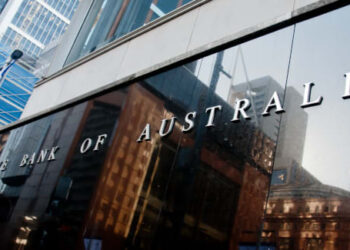
GDP growth has come in weaker than the Reserve Bank of Australia previously forecast in December, with deputy governor Guy Debelle suspecting the main cause has been low growth in household income giving way to slowing consumption.

by Sarah Simpkins
April 12, 2019
in Markets, News
Reading Time: 3 mins read
Share on FacebookShare on Twitter

Stagnating wage growth has been a major contributor to slowing inflation, according to the RBA. It has called for a wage rise, while aiming for inflation to increase to a ‘sustainable’ target range of 2-3 per cent.

In a speech addressing the American Chamber of Commerce on Tuesday, Mr Debelle presented the RBA’s assessment of Australia’s current economic situation, noting tension between the differing states of GDP, labour and business conditions.

X

How the tension is resolved in the coming months will be an important determinant of the central bank’s positioning on monetary policy.

“The two lenses on economic growth provided by the labour market and the GDP data are in stark contrast,” Mr Debelle said.

“A third lens, in the form of business surveys, sits in between the two. Business conditions have declined from their high levels of the first half of 2018 but still remain consistent with around trend growth in the economy.” 

While Australia’s GDP has been weak, the labour market has been strong, with the unemployment rate declining faster than the RBA had previously forecast.

The International Monetary Fund also predicted earlier this week that the Australian economy will grow by 2.1 per cent this year.

Mr Debelle also mentioned the decline in housing prices as a contributor to the slowdown, although he said it was not so much caused by the direct wealth effect of lower housing prices as much as it is from a low turnover in the property market.

“One puzzle related to the possible wealth effect is that the slowdown in household spending has been much more pronounced in NSW than it has been in Victoria, despite similar declines in housing prices,” Mr Debelle said.

“While population growth in Victoria is higher than in NSW, that doesn’t account for the whole difference.”

The RBA said more supply will come into the housing market in Sydney and Melbourne over the remainder of the year, which will further weigh on prices.

In his address, Mr Debelle also took note of global financial markets, with there being a marked decline in many asset prices at the end of 2018, while the global economy has continued to lose momentum this year.

Global growth initially slowed in the second half of 2018, with there being a decline in China and the euro area.

While GDP readings are not yet available for 2019, Mr Debelle said the loss of momentum is evident in business surveys of manufacturing conditions in many economies, although not as marked in services sectors.

“This potentially indicates that the drivers of the slowdown are more external rather than internal. Services say more about domestic demand, which has been more resilient,” Mr Debelle said.

Across Germany, Canada and the UK, GDP growth slowed in the fourth quarter of 2018 while the labour market remained strong.

In the US, GDP growth was around 2 per cent annualised in the final quarter, with employment growth almost as strong.

One explanation for the global economy’s slowing is China’s economic slowdown, Mr Debelle said, with the country’s clampdown on non-bank finance being a significant contributor particularly affecting the private sector.

He also cited escalation in trade tensions, with ongoing uncertainty about when China and the US are likely to settle.

The March quarter Consumer Price Index will be released in a few weeks.
Related Posts

APAC wealth set to double alternatives exposure

by Olivia Grace-Curran
December 12, 2025

In a sign of shifting investment priorities across Asia-Pacific, private wealth portfolios are set to more than double their exposure...

Evergreen funds tipped to reach US$1tn by 2029

by Laura Dew
December 12, 2025

Evergreen funds are set to experience growth of around 20 per cent a year, set to surpass $1 trillion by...

REITs back in favour for 2026

by Georgie Preston
December 12, 2025

Despite mixed performance among listed real estate this year, Principal Asset Management has pegged 2026 as particularly supportive for the...

Leave a Reply Cancel reply

Your email address will not be published. Required fields are marked *

VIEW ALL
Promoted Content

Why U.S. middle market private credit is a powerful income solution for Australian institutional investors

In today’s investment landscape, middle market direct lending, a key segment of private credit, has emerged as an attractive option...

by Tim Warrick
December 2, 2025
Promoted Content

Is Your SMSF Missing Out on the Crypto Boom?

Digital assets are the fastest-growing investment in SMSFs. Swyftx's expert team helps you securely and compliantly add crypto to your...

by Swyftx
December 2, 2025
Promoted Content

Global dividends reach US$519 billion, what’s behind the rise?

Global dividends surged to a record US$518.7 billion in Q3 2025, up 6.2% year-on-year, with financials leading the way. The...

by Capital Group
November 18, 2025
Promoted Content

Why smaller can be smarter in private credit

Over the past 15 years, middle market direct lending has grown into one of the most dynamic areas of alternative...

by Tim Warrick, Managing Director of Principal Alternative Credit, Principal Asset Management
November 14, 2025

Join our newsletter

View our privacy policy, collection notice and terms and conditions to understand how we use your personal information.

Latest Podcast

Podcast

Relative Return Insider: RBA holds, Fed cuts and Santa’s set to rally

by Staff Writer
December 11, 2025
After more than two decades, InvestorDaily continues to be an institution that connects and influences Australia’s financial services sector. This influential and integrated media brand connects with leading financial services professionals within superannuation, funds management, financial planning and intermediary distribution through a range of channels, including digital, social, research, broadcast, webcast and events.

Subscribe to our newsletter

View our privacy policy, collection notice and terms and conditions to understand how we use your personal information.

About Us

  • About
  • Advertise
  • Contact
  • Terms & Conditions
  • Privacy Collection Notice
  • Privacy Policy

Popular Topics

  • Markets
  • Appointments
  • Regulation
  • Super
  • Mergers & Acquisitions
  • Tech
  • Promoted Content
  • Analysis

© 2025 All Rights Reserved. All content published on this site is the property of Prime Creative Media. Unauthorised reproduction is prohibited

No Results
View All Results
NEWSLETTER
  • News
  • Markets
  • Regulation
  • Super
  • M&A
  • Tech
  • Appointments
  • Podcast
  • Webcasts
  • Promoted Content
  • Events
  • About
  • Advertise
  • Contact Us

© 2025 All Rights Reserved. All content published on this site is the property of Prime Creative Media. Unauthorised reproduction is prohibited